logo
Maison
Produits
Au sujet de nous
Visite d'usine
Contrôle de qualité
Contactez-nous
Demande de soumission
Nouvelles
Beijing Jinshengxin Testing Machine Co., Ltd.
Aperçu ProduitsMachine d'analyse entalbique différentiel

Durable Differential Scanning Calorimetry Machine for Precise Thermal Measurement of Plastics Polymers and Material Testing

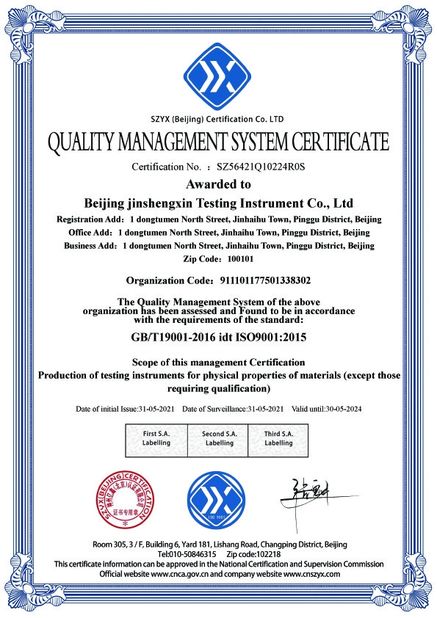
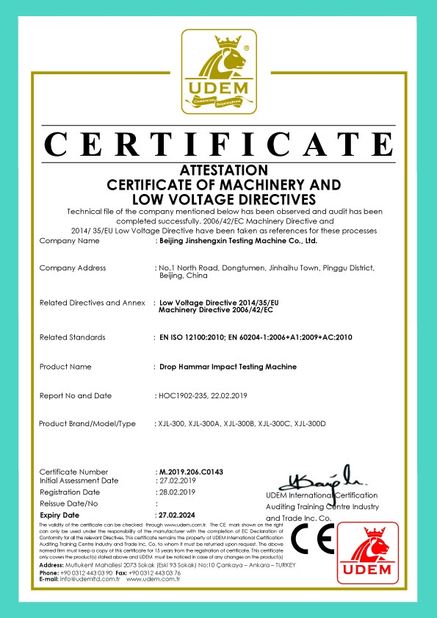
LA CHINE Beijing Jinshengxin Testing Machine Co., Ltd. certifications
Merci pour votre aide pour les produits universels électroniques de machine d'essai

—— Gabriela

C'a été un plaisir fonctionnant avec vous, et j'apprécie considérablement l'effort que vous avez mis des collaborations entre nos sociétés. J'espère que l'association entre deux sociétés sera encore renforcée. Je te souhaite tous les meilleur et succès à l'avenir.

—— M. Si Thu

Je suis en ligne une discussion en ligne

Durable Differential Scanning Calorimetry Machine for Precise Thermal Measurement of Plastics Polymers and Material Testing

Durable Differential Scanning Calorimetry Machine for Precise Thermal Measurement of Plastics Polymers and Material Testing

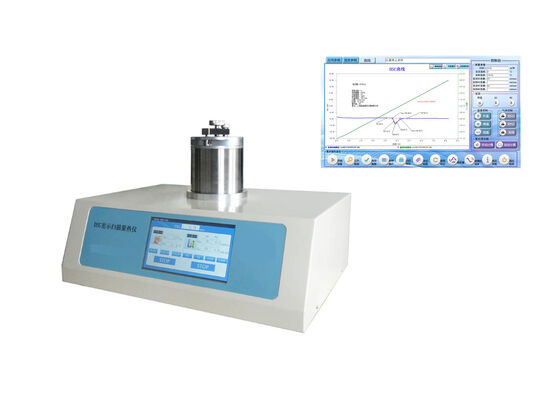
Image Grand :  Durable Differential Scanning Calorimetry Machine for Precise Thermal Measurement of Plastics Polymers and Material Testing

Détails sur le produit:
Lieu d'origine: Pékin, Chine
Nom de marque: JINHAIHU
Certification: ISO 9001
Numéro de modèle: DSC-600
Conditions de paiement et expédition:
Quantité de commande min: 1 ensemble
Détails d'emballage: Boîte en bois d'exportation standard
Délai de livraison: 7 jours ouvrables
Conditions de paiement: T / T, L / C, Western Union, Moneygram, D / A, D / P
Capacité d'approvisionnement: 30 ensembles par mois
Description de produit détaillée
Nom du produit: Machine de calorimétrie différentielle durable pour la mesure thermique précise des polymères plasti Modèle: DSC-600
Certificat: ISO, CE Gamme de DSC: 0~±500mw
Plage de température: Température ambiante ~ 800℃ Refroidissement à l'air Taux de chauffage: 0.1~80 °C/min
Résolution de la température: 0,1 ℃ Fluctuations de température: ± 0,1 ℃
Mettre en évidence:

durable differential scanning calorimetry machine

,

precise thermal measurement machine for plastics

,

material testing DSC machine with warranty

Durable Differential Scanning Calorimetry Machine for Precise Thermal Measurement of Plastics Polymers and Material Testing
Instrument Overview

Differential Scanning Calorimetry (DSC) is a classical thermal analysis technique designed to characterize thermal effects of materials under programmed temperature conditions. It is extensively employed across materials science and chemistry sectors—including R&D, process optimization, quality control, and failure analysis—for its high precision and versatility.

DSC enables systematic investigation of key material properties: phase transitions of inorganic materials, melting and crystallization behaviors of polymer materials, polymorphism of pharmaceutical compounds, and the solid-liquid phase ratio of oils and fats.

Instrument Applications

Differential Scanning Calorimetry (DSC) enables precise quantification of heat-associated physical and chemical changes in materials, covering key parameters including:

  • Glass transition temperature (Tg)
  • Melting point and melting temperature
  • Crystallization behavior and crystallization enthalpy
  • Phase transition reaction enthalpy
  • Thermal stability
  • Curing/crosslinking processes
  • Oxidation induction period (OIP)
Reference Standards
  • GB/T 19466.2 - 2004 / ISO 11357-2:1999 Part 2: Determination of glass transition temperature
  • GB/T 19466.3 - 2004 / ISO 11357-3:1999 Part 3: Determination of melting and crystallization temperature and enthalpy
  • GB/T 19466.6 - 2009 / ISO 11357-3:1999 Part 6: Determination of oxidation induction time (isothermal OIT) and oxidation induction temperature (kinetic OIT)
Technical Parameters
Parameter Specification
DSC Range 0~±500mW
Temperature Range Room temperature ~ 800℃ Air cooling
Heating Rate 0.1~80 ℃/min
Temperature Resolution 0.1℃
Temperature Fluctuation ±0.1℃
Temperature Repeatability ±0.1℃
DSC Noise 0.01mW
DSC Resolution 0.01mW
DSC Accuracy 0.01mW
DSC Sensitivity 0.01mW
Temperature Control Mode Heating, constant temperature (full program automatic control)
Curves Scan Heating scan
Atmosphere Control Instrument automatically switches
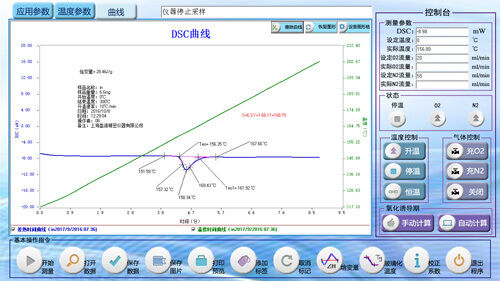
Display 24bit color 7-inch LCD touch-screen display
Data Interface Standard USB interface
Parameter Standards With a standard substance; a key calibration function; the user can correct the temperature and enthalpy personally
Remark All the technical indicators can be adjusted according to user needs
Frequently Asked Questions
Q1: What is the core working principle of a DSC machine?
The DSC machine operates by measuring the heat flow difference between a sample and an inert reference material as both are subjected to a programmed temperature cycle (heating, cooling, or isothermal). This enables quantitative analysis of heat-associated physicochemical changes in the sample, such as phase transitions, melting, crystallization, and thermal decomposition.
Q2: What key physicochemical properties can a DSC machine test?
It can precisely quantify critical parameters including glass transition temperature (Tg), melting point (Tm), melting enthalpy, crystallization behavior, crystallization enthalpy, phase transition enthalpy, thermal stability, curing/crosslinking degree, and oxidation induction period (OIP).
Q3: What are the typical temperature range and temperature accuracy of a standard DSC machine?
Standard models offer a temperature range of -150 °C to 700 °C (extendable to 1500 °C for high-temperature variants). Temperature accuracy is ±0.1 °C, with temperature resolution up to 0.01 °C—ensuring precise control of the programmed temperature cycle.
Q4: Which materials are compatible with DSC testing?
It is widely applicable to polymers (plastics, rubbers, fibers), inorganic materials, pharmaceuticals, food ingredients, oils and fats, composites, and other materials requiring thermal property analysis—covering R&D, quality control, and failure analysis scenarios.
Q5: Does the DSC machine comply with international testing standards?
Yes, it fully complies with major international standards such as ISO 11357 (polymers), ASTM E967/E968 (general DSC methods), GB/T 19466 (plastics), and USP <891> (pharmaceuticals)—ensuring test results are recognized globally.
Q6: What is the sample requirement for DSC testing, and how is data processed?
The recommended sample weight ranges from 2-10 mg (depending on material type). The machine is equipped with a high-sensitivity heat flow sensor (sensitivity ≤0.1 μW) and professional analysis software, which automatically records test curves (heat flow vs. temperature/time) and calculates key parameters. Data can be exported in Excel/CSV/PDF formats for further analysis.
Q7: What maintenance is required for the DSC machine, and what is the service life of core components?
Routine maintenance includes annual calibration of temperature and heat flow (using standard reference materials like indium), and regular cleaning of the sample pan. Core components (sensor, heating/cooling module) have a service life of ≥50,000 test cycles. We provide calibration protocols and technical support for maintenance.
Q8: Can the DSC machine be customized for specific testing needs?
Yes, customization options are available, including extended temperature ranges (low-temperature cryogenic modules or high-temperature furnaces), specialized sample pans (hermetic, pressure-resistant), and tailored software functions (e.g., kinetic analysis modules for curing reactions)—adapting to unique application scenarios.
Product Images

Coordonnées
Beijing Jinshengxin Testing Machine Co., Ltd.

Personne à contacter: Ms. Zoe Bao

Téléphone: +86-13311261667

Télécopieur: 86-10-69991663

Envoyez votre demande directement à nous (0 / 3000)

Autres Produits